The nastiest bar in the capital of Gozo was called the Glory of England. It is ironic that this rather dirty place should be named after the nation that used to rule the waves. The Maltese (and especially the Gozitans), however, have always taken England with a pinch of salt.
Gozo's capital is known to everybody as Victoria, but the locals call it Rabat. The name of the British queen was given to this town in her Golden Jubilee in 1887. The Maltese thanked her profusely, erected a monument and carried on calling the place Rabat. There's no disaffection, though: the Maltese welcomed the British in the early nineteenth century as a way to break with the ancien régime embodied by the rules of the Knights of St John and then the French. In World War II, they fought bravely to protect the islands from German and Italian air raids. Some say they fought for their King.
If not the 'Glory of England' any more, Comino, Gozo and Malta are amongst the jewels of the Mediterranean Sea. Malta is a beautiful tourist spot, the highlight of which is its capital city, Valletta. Visiting the Church of St John (and indeed its museum, which has two amazing Caravaggios) is a must. I prefer the small islands, though. Gozo and Comino are rather unexploited, which makes a visit really worthwhile. In Gozo I enjoyed nine days of sun, swimming and peace and that I would recommend to everyone. Now I'm ready for a year of challenges and willing to do more solitary travelling.
Tuesday, 14 August 2007

Sunday, 22 July 2007
Size does indeed matter

"After North American and Asian cities marked their 20th century economic booms with skyscrapers, the Gulf grew eager to show off its success with ever taller buildings. In Dubai, long an oil-rich Gulf symbol of rapid economic growth, the building reflects the city's hunger for global prestige."
Wednesday, 4 July 2007
Fly it in the face of terror?

These days James McTeigue's V for Vendetta takes on new meanings. Originally released in 2006, it tells the story of a coup d'etat staged in Britain in some twenty years. The people, led by a psycho who wants to emulate Guy Fawkes, rebel against a fascist power that won power as a result of the fear people felt after a number of terrorist attacks on the territory.
This fear seems today more patent than ever. Even NHS doctors are under suspicion! As an antidote, The Sun shows a British flag on its cover; its headline reads "Fly it in the face of terror". Such display of nationalism, triggered by recent terrorist threats in Glasgow and London, is not blatant in the case of "serious" newspapers. The Times, however, publishes the testimony of a senior British cleric working in Baghdad. According to him, a leader of Al-Qaeda warned him about doctors in England: "Those who cure you will kill you".
However dangerous terrorism is, hysteria hasn't proved to be very helpful.
Sunday, 24 June 2007
On weddings and bus stops
Some weddings services are really beautiful. If the priest and the music are nice the whole thing can be really enjoyable. If, on top of that, you can see all your male friends crying like babies while their girlfriends hand them tissue after tissue, the wedding rocks. That was the case with the wedding of Bettina and Ben at Magdalen College. They looked lovely, the priest was cool, the music standards were outstanding and all men cried with only one exception: me. I never cry, anyway, so it doesn't really mean anything. I was saying that the service was so good that it almost made me want to get married myself. Well, not quite, but almost.
What really bothers me about the idea of getting married is being the centre of attention while doing things that are totally out of character. I wouldn't mind having two-hundred people ovationing and cheering me. My ego, in fact, would rather enjoy that. But it'd be good if it happened after I sing or deliver a paper or receive a prize. A wedding is a party you organise and pay. You also choose the claque, so getting an ovation there and being in the spotlight at a party that's costing you a fortune wouldn't be my cup of tea. Especially, after having said all the cheesy things I'd never say in a normal day and wearing clothes that I will also not wear again.
There's no reason to panic, though. Nobody wants to marry me. In fact, since I've been dumped nobody looks at me. When you have a partner everybody fancies you and wants to bed you at once. As soon as you're single, people don't want you anymore. It's like waiting for the bus next to a park. You really need a wee but you don't go because you know that as soon as you walk away from the bus stop, the bus will arrive and you'll miss it. When you have a partner, on the other hand, you have the looks of a man in his fifties who's driving a very fast car very slowly. And you get the looks of all the young ones who think they'd like to be driving that car (or else being driven by you).
What really bothers me about the idea of getting married is being the centre of attention while doing things that are totally out of character. I wouldn't mind having two-hundred people ovationing and cheering me. My ego, in fact, would rather enjoy that. But it'd be good if it happened after I sing or deliver a paper or receive a prize. A wedding is a party you organise and pay. You also choose the claque, so getting an ovation there and being in the spotlight at a party that's costing you a fortune wouldn't be my cup of tea. Especially, after having said all the cheesy things I'd never say in a normal day and wearing clothes that I will also not wear again.
There's no reason to panic, though. Nobody wants to marry me. In fact, since I've been dumped nobody looks at me. When you have a partner everybody fancies you and wants to bed you at once. As soon as you're single, people don't want you anymore. It's like waiting for the bus next to a park. You really need a wee but you don't go because you know that as soon as you walk away from the bus stop, the bus will arrive and you'll miss it. When you have a partner, on the other hand, you have the looks of a man in his fifties who's driving a very fast car very slowly. And you get the looks of all the young ones who think they'd like to be driving that car (or else being driven by you).
Saturday, 16 June 2007
Sleeping with the elderly

All of a sudden, some of my female friends (most of them in their late twenties) have started dating men in their late forties or early fifties. My female friends tell me that this is the result of their discovery that sex is actually not about acrobatics and erections that defy gravity, but about care. Men in their forties, they seem to imply, know best. I want to believe that my young male friends would have already learned that lesson, but I'm probably deceiving myself.

In fact, I'm going through a self-deceptive phase: a good proof of it is that I also thought the Palestinians deserved to have a state and that Venezuelan president Hugo Chávez was gay-friendly. Well, this is a little lie a (gay) friend of mine told me recently. Needless to say, my extremely intelligent friend is a closet liberal who's still caught up in the radical farce and is finding it very difficult to get over it. This type of person usually finds interesting ways to justify left-wing authoritarian regimes, even if "evil right-wing" and "awfully pro-American" states such as Colombia and Mexico are actually doing more in favour of gay rights than Chávez and his ilk.
Anyhow, I think Chávez is more into the sort of relationship my female friends are looking for at the moment. The should get in touch with him.
Sunday, 10 June 2007
So much to tell

I'm back! I know, I know I haven't written anything for a very long time. It wasn't certainly because I didn't have anything to say. On the contrary, I've had a hectic term.
I've been busy teaching, traveling to Spain and Switzerland and being elegantly dumped. I've also gone to see sort-of-boring operas and really boring ones. I haven't read much, really, but I survived my confirmation of status in spite of the merciless drilling I suffered during the viva.


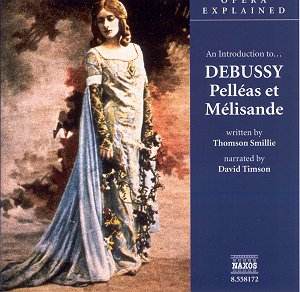

But the best of all is that I've been rehearsing for a play. Yes, a play. This is probably the first step of an international career as an actor. Watch out, Brad, watch out. I'm doing it with my friends Dan and Alex at St Catz on Monday 18 June. Please, come. It might not be the best you've seen, but we'll have a good time. Please note that at the entrance there will be a security check searching for vegetables and other sharp items.
Tuesday, 17 April 2007
La France...
French politics are amongst my major interests. I'm mainly interested in their self-deception. The French are people who saw a neo-nazi party ranking second in the first vote in the 2002 presidential elections, but did not find it disturbing enough to reconsider their social and economic policies. Mrs Sacau sent me this morning the most recent example of their sheer self-deception.
French newspaper Libération publishes the results of a poll and concludes that Le Pen and his ideas are massively rejected in France. But the figures read: 13% of the French believe that if Le Pen makes it to the second vote it would improve the image of France abroad. Ready for more? 22% believe that it would be good for the French democracy. The tone of the analysis is self-complacent and almost triumphal: "we French people are great because ONLY 22% of us think that the presence of a neo-nazi party in the second vote would be good for our democracy". Had this poll happened in the UK, the US, Germany or Spain, these countries would be in deep crisis and start debating their situation. In France, they rejoice.
All four candidates in this general election (Bayrou, Le Pen, Sarkozy and Segolene-Royal) talk about reform, but no one challenges the idea that France should still aim at implementing Enlightened ideas. Mes amis, the Enlightenment is over and its ideas, many of which are still valid, need to be reconsidered. France is no longer white, Europe is no longer leading the world and we have to get ready for the challenges of the future. An ultra-nationalist France won't take them anywhere. But they still think they're modern-minded.
There's another issue here. If almost any other country were self-deceptive, it wouldn't get on everybody's nerves simply because no other declining country claims to be the "most modern" and "most wonderful", the one that should be imitated everywhere. Mrs Sacau believes Le Pen should definitely rank second, so the French (and the European centre left in general) eventually realise that France is no longer a model.
French newspaper Libération publishes the results of a poll and concludes that Le Pen and his ideas are massively rejected in France. But the figures read: 13% of the French believe that if Le Pen makes it to the second vote it would improve the image of France abroad. Ready for more? 22% believe that it would be good for the French democracy. The tone of the analysis is self-complacent and almost triumphal: "we French people are great because ONLY 22% of us think that the presence of a neo-nazi party in the second vote would be good for our democracy". Had this poll happened in the UK, the US, Germany or Spain, these countries would be in deep crisis and start debating their situation. In France, they rejoice.
All four candidates in this general election (Bayrou, Le Pen, Sarkozy and Segolene-Royal) talk about reform, but no one challenges the idea that France should still aim at implementing Enlightened ideas. Mes amis, the Enlightenment is over and its ideas, many of which are still valid, need to be reconsidered. France is no longer white, Europe is no longer leading the world and we have to get ready for the challenges of the future. An ultra-nationalist France won't take them anywhere. But they still think they're modern-minded.
There's another issue here. If almost any other country were self-deceptive, it wouldn't get on everybody's nerves simply because no other declining country claims to be the "most modern" and "most wonderful", the one that should be imitated everywhere. Mrs Sacau believes Le Pen should definitely rank second, so the French (and the European centre left in general) eventually realise that France is no longer a model.
Subscribe to:
Posts (Atom)